Department: Interior design Engineering
The workshop in brief: Prof. Sabah Shawkat explained the tensegrity concept within the structures and how to design according to the forces in the elements. He further discussed the art of tensegrity, the definition of the term, and its history. Tensegrity consists of both tension and compression forces. Designers and architects continue to study and improve the concept and are pioneers in creating spaces, forms, elements, and structures. The workshop focused on lightweight design that is seen in different forms, shapes, sizes, and variations in a broad spectrum of use. Designing lightweight models is a complex task. A particular task related to the morphology of non-conventional design is form-finding. Physical models were used to describe the power of the variability and beauty of lightweight elements for interior design as a bridge to achieve the fine art of structural morphology. In models, every part is visible and constructive, relying on the proper functioning of all parts. Currently, lightweight structures are an integral part of architectural creation and design. They transform the space with their untraditional solutions, exceptional shape, as well as subtle and elegant quality.
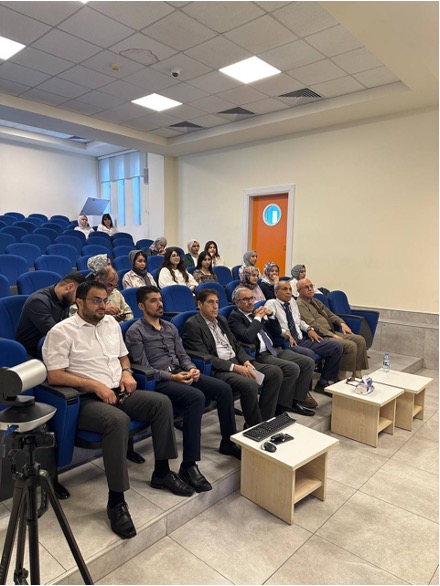
Participants: 30 participated in the workshop.
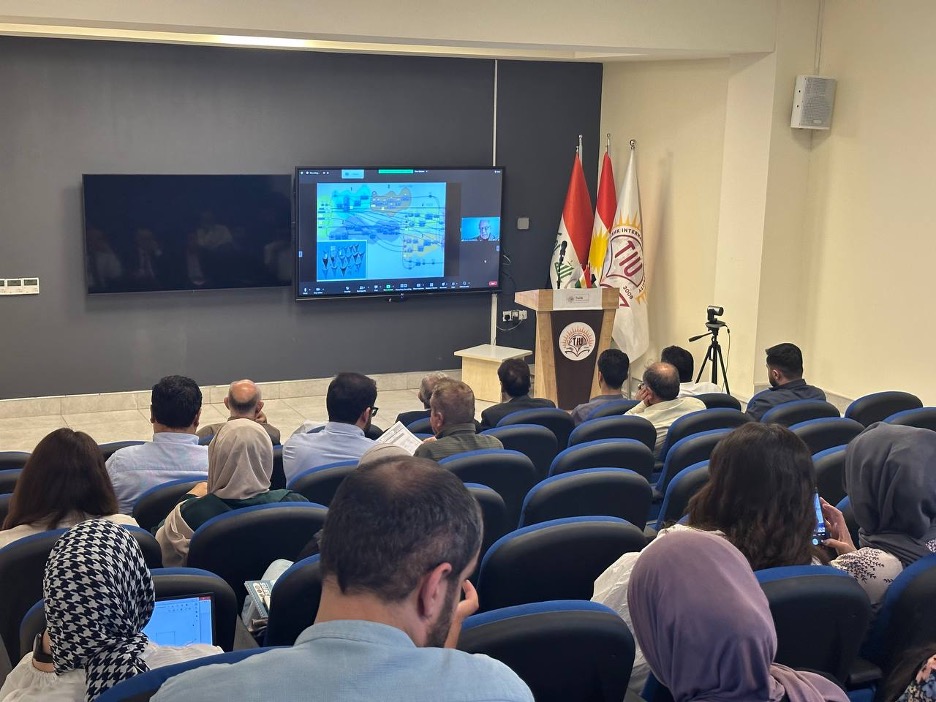
Place: Hall 302, Education Building| Tishk International University – Erbil
1st session: presentation about how geometry is formed?what software is used to form it? How important is it to Create virtual and subsequent real models in a creative way.
2nd session: showing examples about the free form geometry, discussion between the audience and the presenters, brainstorming and answering questions.
M.Eng. Assoc. Prof. Sabah Shawkat, Head of cabinet of engineering subjects Department of Architecture
. Have knowledge about traditional (form follows function) and non-traditional (form follows force) Morphology.
·Design parametric models of non-conventional structures, form-finding, and analyse the process of thinking.
.Emphasize the importance of integrating structural considerations into architectural design,
· viewing architecture and structure together as one integrated concept.
· Create virtual and subsequent real models in a creative way by physically searching for a form and applying
numerical methods based on finding the non-linear shapes.
· Modern geometry became more attractive in the architectural design process with great innovations from
form-finding stages to the final fabrication.
https://engineering.tiu.edu.iq/interiordesign/international-workshop-on-free-form-geometry-in-architecture-spaces/