Department: Artificial Intelligence
Language is neither fixed nor uniform, it bends under
the pressure of context, fragments across
geographies, and continuously resists the boundaries
we impose upon it. It carries within it the
traces of history, identity, and social belonging, and
adapts, often in subtle, difficult-to-formalize
ways, to the demands of every communicative situation.
Understanding language in its full
complexity has long been one of the central challenges
of linguistics, and it is a challenge that
artificial intelligence is increasingly being called upon to
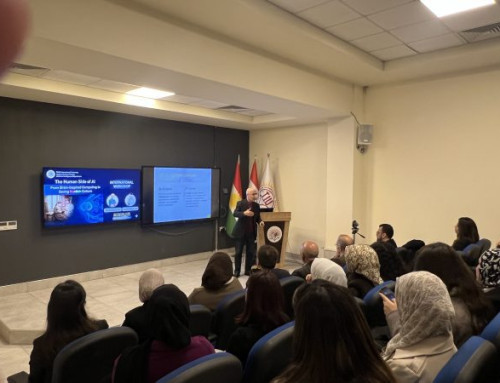
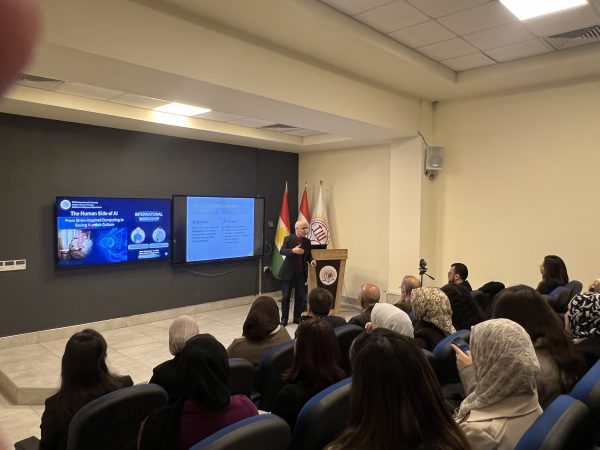
meet. This workshop brings together two
complementary perspectives on how artificial
intelligence grapples with this complexity, exploring
what computational methods can reveal about the
structural and geographic dimensions of human
language.
Drawing on recent advances in large language models
and AI-generated embedding spaces, the
two seminars collectively address a fundamental
question: what does it mean for a machine to truly
read language? From the interpretation of non-standard
linguistic patterns to the cartography of
regional dialect variation, the presentations highlight
both the analytical power and the inherent
limitations of computational approaches to linguistic
inquiry.
The objective of this workshop is to foster critical
engagement with AI-driven methodologies in
linguistics, encourage dialogue between computational
and traditional approaches to language
analysis, and open new avenues for interdisciplinary
research at the intersection of artificial
intelligence, linguistics, and the study of human
communication.
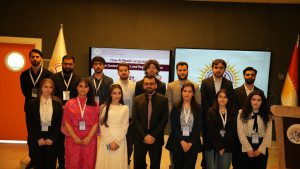
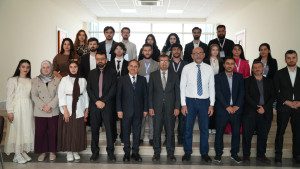
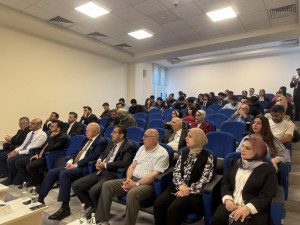
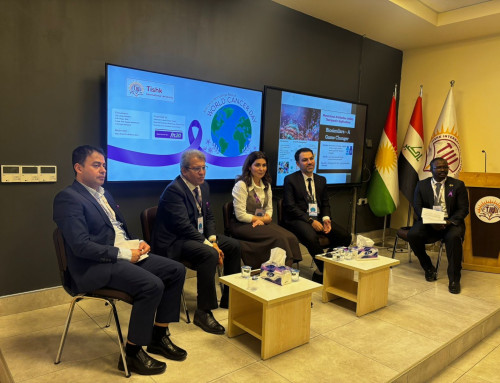
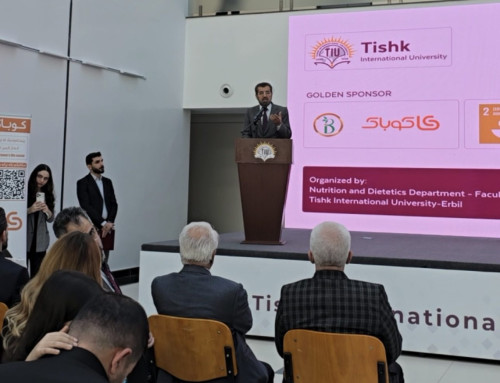
Participants: 90+
Place: Education Building, Hall 302
Session topics:
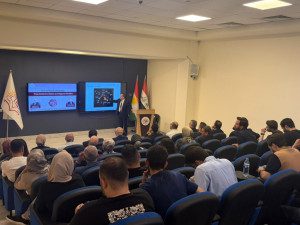
Session one: How AI understands context: linguistic
deviation and large language models.
Session two: The Geometry of Language: Mapping
Regional Variations with AI Embedding Spaces.
Prof. Dr. Ibrahim Ismael Hamarash, University of Salahaddin–Hawler.
Assist. Prof. Dr. Abdulbasit Kamil Faeq, Koya University.
1. Foster Critical Engagement: To foster critical
engagement with AI-driven methodologies in
linguistics.
2. Encourage Academic Dialogue: To encourage
dialogue between computational and traditional
approaches to language analysis.
3. Promote Interdisciplinary Research: To open
new avenues for interdisciplinary research at the
intersection of artificial intelligence, linguistics,
and the study of human communication.
4. Assess Computational Capabilities: To evaluate
both the analytical power and the inherent
limitations of computational approaches to
linguistic inquiry.
5. Reveal Language Dimensions: To discover what
computational methods can reveal about the
structural and geographic dimensions of human
language.